

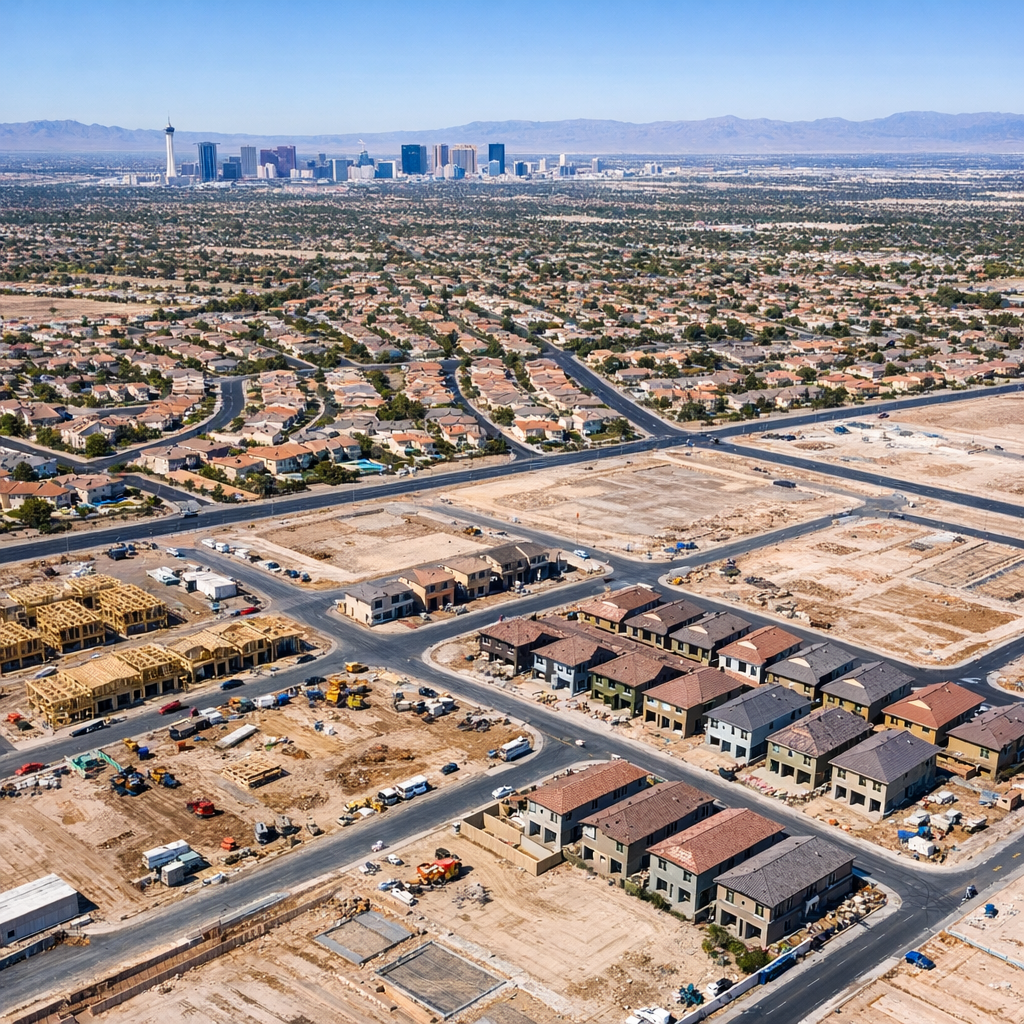
The Las Vegas housing market is experiencing notable changes, offering both challenges and opportunities for residents and investors. Understanding these shifts is crucial for making informed decisions.
Market Trends
Recent data indicates a slight decrease in home prices. Over the three months ending April 2026, the median sale price was $440,000, a 2.8% decline compared to the same period last year. Homes are spending more time on the market, averaging 62 days before sale, up from 50 days previously. Additionally, the number of homes sold in April was 2,340, down from 2,427 the previous year. This trend suggests a cooling market, providing buyers with more negotiating power and a wider selection of properties.
Rental Market Dynamics
The rental sector remains robust, with demand for apartments and single-family rentals holding steady. While specific rental price data is limited, the increased inventory in the housing market may influence rental rates, potentially leading to more competitive pricing for tenants.
New Developments
Several significant projects are underway, aiming to address housing needs and community growth:
Patriot Housing LV
Located at Tree Line Drive and Vegas Valley Drive, this development focuses on providing affordable housing for veterans. The project includes 348 units, comprising studio, one-, two-, and three-bedroom apartments, designed to support veterans and their families with both housing and essential services.
Ovation Property Management Initiatives
Ovation is expanding its portfolio with several developments:
- Heirloom at Bruner: A 194-unit affordable senior housing community, breaking ground in Q3 2026.
- Casara at West Henderson: A 390-unit affordable workforce housing project, set to begin construction in Q2 2026.
- Aera at Durango: A 381-unit development, with construction starting in Q3 2026.
- Heirloom at Robindale: A 363-unit affordable senior housing community, breaking ground in Q4 2026.
- Heirloom at Gagnier: A 190-unit affordable senior housing project, also commencing in Q4 2026.
These projects aim to provide diverse housing options, catering to seniors, workforce members, and families, contributing to the city’s growth and addressing housing affordability.
Conclusion
The Las Vegas housing market is in a state of transition, with declining home prices and increased inventory offering new opportunities for buyers. Concurrently, ongoing developments are set to enhance the housing landscape, providing options for various demographics. Staying informed about these trends is essential for anyone looking to navigate the Las Vegas real estate market effectively.